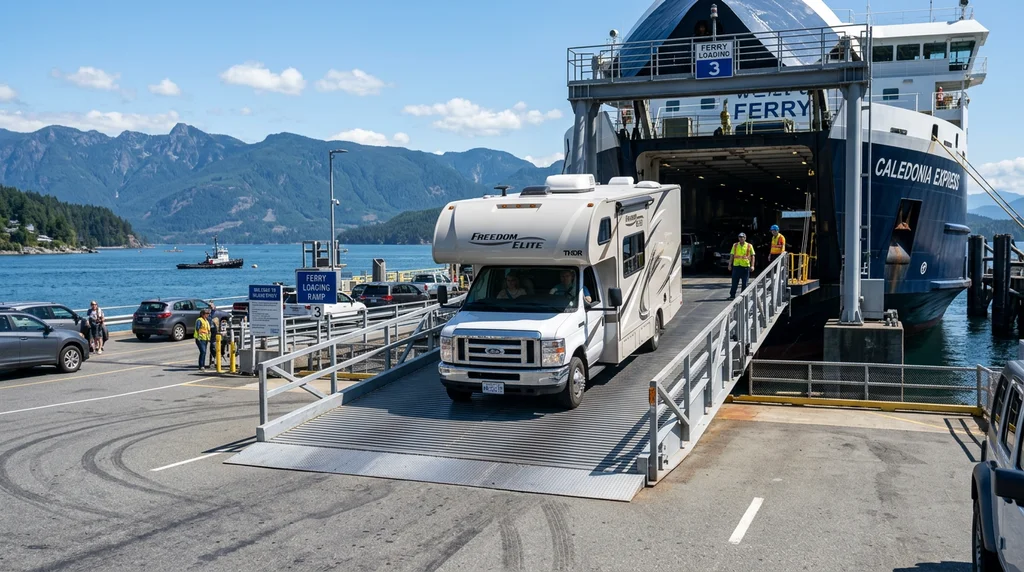
For motorhome and campervan travellers, the ferry is the gateway to the adventure — the way to reach the islands or the continent with your home on wheels and everything you need already packed. It's often the only practical option, and a big part of the fun.
Taking a larger vehicle needs a little more planning than a car, mainly around measuring, booking and gas. This guide walks through it all so your crossing is smooth from booking to boarding.
by Len
Measure your vehicle first
Before you book, get accurate measurements — they determine your fare and your space:
- •
Length: measure the full length, including any bikes, racks or a towed trailer
- •
Height: measure the true height, including roof boxes, aerials or satellite domes
- •
Be precise: fares are banded by size, and vehicles can be checked at the port
- •
Trailers and toads: a towed car or trailer usually needs declaring separately
Booking by size
Motorhomes are priced by dimensions, so booking is a little different from a car:
- •
Enter dimensions carefully: choose the correct length and height band
- •
Book early: dedicated space for larger vehicles is limited and sells out in summer
- •
Passengers: add everyone travelling, as with any vehicle booking
- •
Awkward sizes: very long or tall vehicles may have restrictions — check the operator
Gas rules
Gas is the key extra consideration for motorhomes and campervans:
- •
Declare your gas: tell the operator you're carrying gas cylinders when you book or check in
- •
Turn it off: gas is normally required to be turned off at the cylinder during the crossing
- •
Number of cylinders: some operators limit how many you can carry — check the rules
- •
Refillable systems: these have their own requirements, so confirm before you travel
Checking in and boarding
Larger vehicles need a bit more time and care at the port:
- •
Arrive early: allow extra time, as motorhomes often board separately or first
- •
Follow marshalling: you'll be directed to a lane and loaded to suit the deck layout
- •
Low clearance: mention low-hanging skirts or long overhangs, as some ramps are steep
- •
Height limits: very tall vehicles may be directed to a specific deck
On board
Once loaded, it's much like travelling with a car:
- •
You can't stay inside: for safety you travel in the passenger areas, not your vehicle
- •
Take what you need: bring essentials up, as you can't return during the crossing
- •
Secure loose items: inside the van, so nothing shifts in a swell
- •
Pets: if travelling with a pet, they can't stay in the vehicle — check the options
Travelling abroad
Taking a motorhome to Europe adds a few things to check:
- •
Documents: passport, vehicle documents and insurance valid for travel abroad
- •
EES entry system: allow time for border checks on arrival in the EU
- •
Kit requirements: some countries require specific equipment to be carried
- •
Plan your first stop: know where you're heading after you roll off
Tips for a smooth crossing
A few final pointers for motorhome travel:
- •
Fuel up beforehand: fill the tank before the port, where fuel can be limited
- •
Know your dimensions: keep your length and height noted for check-in
- •
Empty tanks sensibly: travel with waste tanks empty and fresh water as needed
- •
Arrive relaxed: giving yourself plenty of time makes loading a big vehicle stress-free
Related guides
For more, see our guides on taking your car on a ferry, ferry luggage allowances, and the EU border rules for travel to Europe.
Frequently Asked Questions
Can I take a motorhome on a ferry?
Yes — ferries carry motorhomes and campervans. You book by the vehicle's length and height, and there are specific rules around carrying gas.
How are motorhome ferry fares calculated?
By vehicle dimensions — length and height bands — so measure accurately, including roof boxes, bikes, racks and any trailer.
What are the gas rules for motorhomes on ferries?
You must declare gas cylinders and normally turn them off at the cylinder during the crossing. Some operators limit how many you can carry — check the rules.
Can I stay in my motorhome during the crossing?
No — for safety you travel in the passenger areas, not your vehicle, so take what you need with you before leaving the car deck.
What do I need to take a motorhome to Europe?
Valid passport, vehicle documents and insurance, any equipment required by the countries you visit, and time for the EES entry checks on arrival.