The relaxed rule
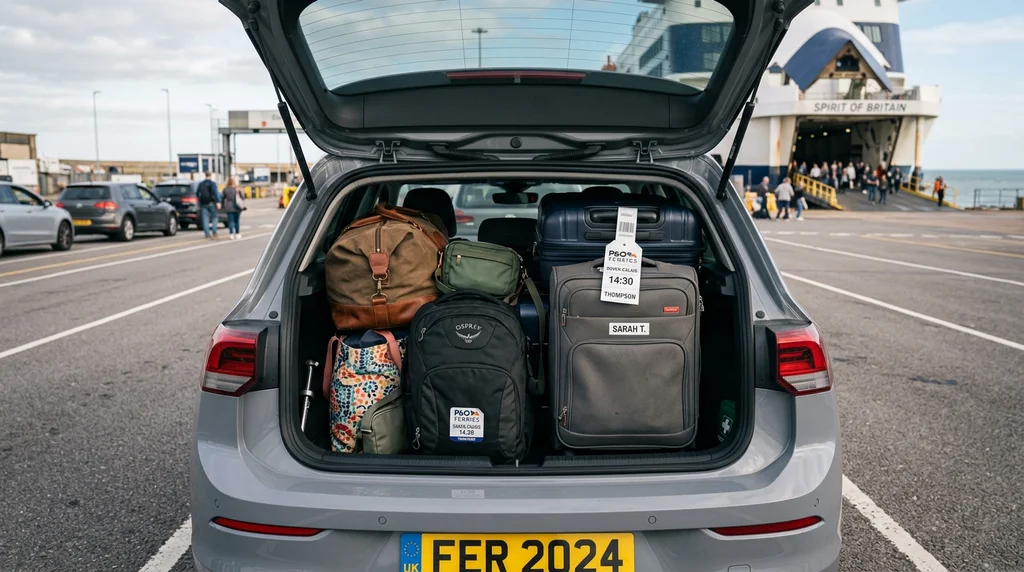
Compared with flying, ferries are wonderfully generous about luggage. There's usually no strict weight limit and no per-bag charge, which is a big part of why families and road-trippers love the ferry.
The practical limit is simply what fits in your car, or what you can carry as a foot passenger — not an airline-style allowance.
Taking a car
Travelling with a vehicle, luggage is very simple:
- ● Fill the car: pack the boot and seats as you would for any road trip
- ● Roof boxes and racks: allowed, but declare them when booking as they affect your dimensions
- ● No weighing: there's no baggage weigh-in as at an airport
- ● Take essentials up: you can't return to the car at sea, so bring what you need on board
Foot passengers
On foot the rules are still generous, but you carry your own bags:
- ● Sensible allowance: typically a couple of cases plus hand luggage, more than any airline
- ● You carry it: you'll move your bags from check-in to the ship and to your seat or cabin
- ● Trolleys: some terminals have trolleys, but don't count on them
- ● Store on board: luggage racks are usually available near the passenger lounges
What you can't bring
A few restrictions still apply:
- ● Dangerous goods: flammable, explosive or hazardous items are not allowed
- ● Fuel and gas: spare fuel cans and gas cylinders have strict rules, especially for motorhomes
- ● Certain foods across borders: some food and plant items can't be taken into the EU
- ● Duty-free limits: allowances apply to alcohol and tobacco on international routes
Motorhomes and gas
If you're travelling in a motorhome or campervan, gas needs care:
- ● Declare gas cylinders: tell the operator, as there are rules on carrying and turning them off
- ● Turn off at the valve: gas is normally required to be turned off during the crossing
- ● Check the route rules: requirements vary, so confirm with your operator before you travel
Tips
A few final pointers:
- ● Pack a day bag: keep essentials in one bag to take up from the car or to your seat
- ● Label your bags: helpful if you're storing them on a luggage rack
- ● Don't overpack to carry: as a foot passenger, remember you're carrying it all yourself
- ● Check duty-free limits: know the allowances before stocking up on international routes
Related guides
For more, see our guides on what to pack for a ferry crossing, taking a ferry without a car, and taking your car on a ferry.