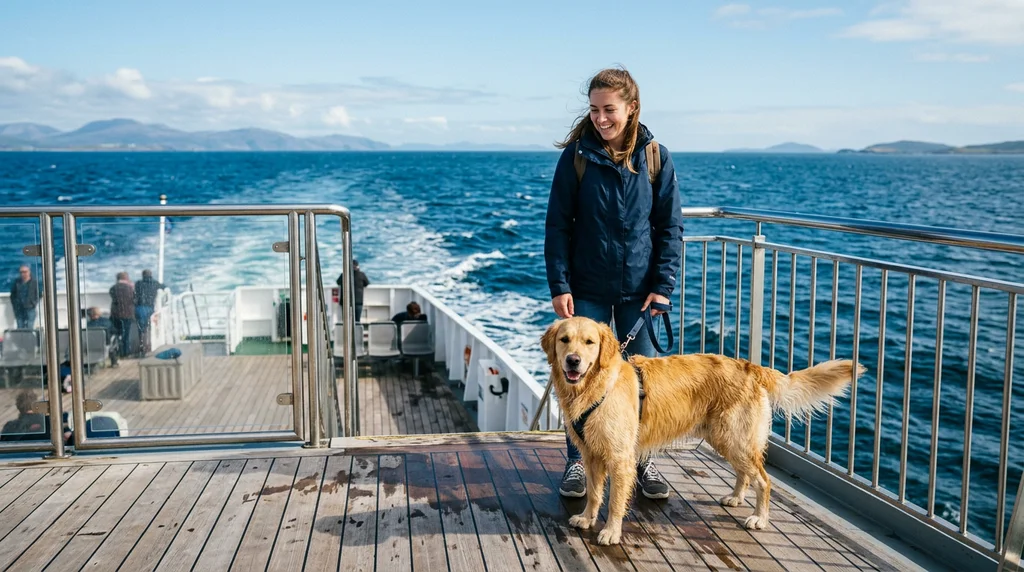
Ferries are one of the best ways to travel with a pet. Unlike flying, you can bring your dog with you on the journey, keep them close, and avoid the stress of the aircraft hold — one of the main reasons many owners choose the ferry.
How pets travel varies by operator and route, from staying in the car on short domestic hops to dedicated pet-friendly cabins on long international crossings. This guide covers the options, the paperwork and how to keep your pet calm.
by Len
How pets travel on ferries
There are a few different arrangements, depending on the ferry and route:
- •
Pet-friendly cabins: on long crossings, cabins where your dog can stay with you — these sell out fast
- •
Onboard kennels: supervised kennels on the car deck or a dedicated area, on some long routes
- •
In the vehicle: on some short crossings, pets stay in the car (but not where the car deck is closed)
- •
Pet lounges and deck areas: some ships have dedicated pet areas or allow pets on outside decks on a lead
Short domestic crossings
On short UK domestic routes — like the Isle of Wight — pets are usually welcome, often travelling with you in the passenger areas or on deck on a lead. Some operators ask that dogs stay in the car, with a designated area on foot-passenger services.
Because these crossings are short, there's rarely a need for kennels or cabins. Always check the individual operator's pet policy before you travel.
Long and overnight crossings
On longer routes — to Spain, or overnight to the Netherlands — the options are more structured:
- •
Pet-friendly cabins: the most comfortable choice, letting your dog stay with you overnight
- •
Kennels: an alternative where you can visit your pet at set times during the crossing
- •
Book early: both pet cabins and kennel spaces are limited and sell out in summer
- •
Not in the car: on these ships you can't leave a pet in the car, as the deck is closed at sea
Travelling abroad: pet documents
Taking a pet to Europe means meeting entry requirements. Rules change, so always check the current ones, but they typically involve:
- •
Microchip: your pet must be microchipped for identification
- •
Rabies vaccination: an up-to-date rabies vaccination is normally required
- •
Health documentation: an animal health certificate or pet passport, depending on current rules
- •
Tapeworm treatment: required for dogs entering some countries, given within a set time before travel
- •
Return to the UK: separate requirements apply for bringing your pet back, so plan both directions
Keeping your pet calm on board
A few things help make the crossing easier for your pet:
- •
Exercise first: a good walk before boarding helps them settle
- •
Bring familiar things: a favourite blanket, toy or their own bed for a cabin
- •
Water and food: bring water and avoid a big meal right before sailing
- •
Toilet breaks: use the pet relief areas some ships provide, and go before boarding
- •
Stay calm yourself: pets pick up on your mood, so a relaxed owner helps a nervous dog
Assistance dogs
Assistance dogs are welcome on ferries and are usually allowed to stay with their owner in passenger areas throughout the crossing, rather than in a kennel or the car.
It's still worth telling the operator in advance when you book, so they can note your needs and make sure the arrangements are in place.
Related guides
For more on the practical side of ferry travel, see our guides on taking your car on a ferry and the EU border rules for travelling to Europe.
Frequently Asked Questions
Can I take my dog on a ferry?
Yes — most ferries carry pets, whether in a pet-friendly cabin, an onboard kennel, a pet area, or with you on deck, depending on the route.
Can my pet stay in the car on a ferry?
Only on some short crossings. On longer routes the car deck is closed at sea, so pets travel in a cabin, kennel or pet area instead.
What documents does my pet need to travel to Europe?
Typically a microchip, an up-to-date rabies vaccination, and an animal health certificate or pet passport — plus tapeworm treatment for some countries. Check current rules.
Are pet-friendly cabins available on all ferries?
No — they're offered on many long and overnight routes but are limited and sell out fast, so book early.
Can assistance dogs travel with me on a ferry?
Yes — assistance dogs are usually allowed to stay with their owner in passenger areas throughout the crossing. Tell the operator when you book.