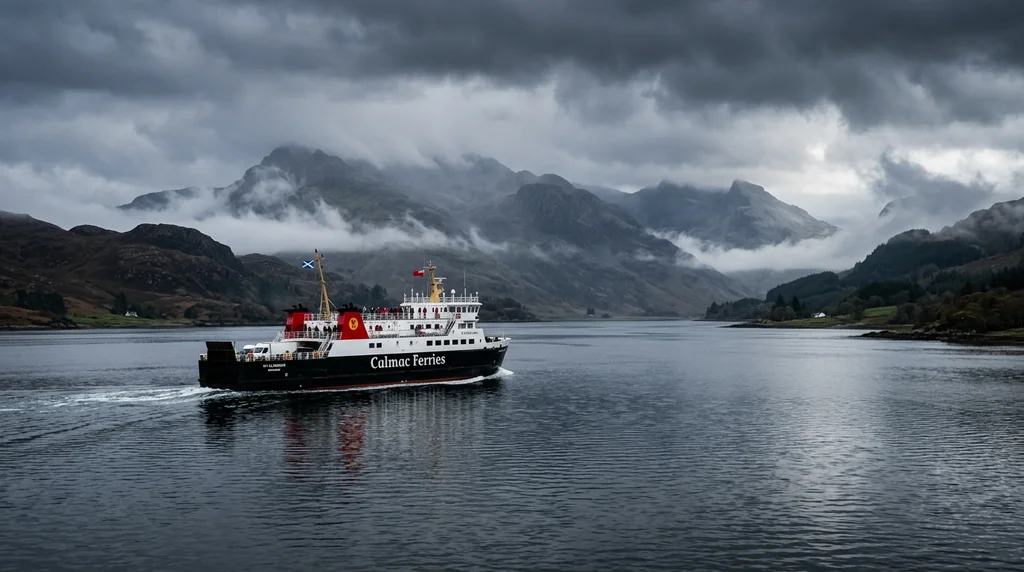
Scotland has one of the largest ferry networks in Europe, and for dozens of its islands the ferry is the only way in. Most Scottish ferry travel isn't international — it's the crossing from the mainland out to the islands of the west coast and the far north.
Two operators handle the vast majority of it: CalMac, which runs the west coast and the Hebrides, and NorthLink, which sails to Orkney and Shetland. This guide explains how the network works, which operator runs where, how to reach the most popular islands, and when to book.
CalMac and NorthLink: who runs what
Almost every ferry you'll take in Scotland is run by one of two operators, with a handful of smaller companies filling the gaps.

CalMac
- Network: west coast and Hebrides
- Routes: 30+
- Mainland hubs: Ardrossan, Oban, Mallaig, Kennacraig, Ullapool
- Islands: Arran, Bute, Mull, Islay, Skye, Lewis, Harris and more
CalMac (Caledonian MacBrayne) is the big one — more than 30 routes across the west coast and Firth of Clyde, and the lifeline service for most of the Hebrides. Its red-and-white ferries are a familiar sight across the Highlands and Islands.
Read more about CalMac »
NorthLink
- Network: Northern Isles
- Routes: Orkney and Shetland
- Mainland hubs: Aberdeen, Scrabster
- Ships: overnight cabins, restaurant, cinema on the Aberdeen sailings
NorthLink handles the Northern Isles, sailing to Orkney and Shetland. The Aberdeen crossings are long enough — up to 12 hours to Shetland — that the ships feel almost like small cruise liners, with cabins, a restaurant and a cinema.
Read more about NorthLink »Beyond these two, Pentland Ferries runs a fast, short crossing to Orkney from Gill's Bay, and Western Ferries operates the Gourock to Dunoon route on the Clyde. Most Scottish ferry services are subsidised "lifeline" routes, run under contract to keep island communities connected year-round.
The most popular Scottish islands
Arran
"Scotland in miniature" — mountains, beaches, Brodick Castle, Goatfell and the Arran distillery, all on one accessible island reached from Ardrossan by train-and-ferry from Glasgow.
Mull
A wildlife-rich all-rounder — colourful Tobermory, Duart Castle, eagles and otters, and the gateway to sacred Iona and Fingal's Cave on Staffa.
Skye
Scotland's most visited island, famous for the Cuillin mountains, the Old Man of Storr and the Quiraing. It also has a road bridge, but the ferry offers the classic experience.
Islay
The whisky capital, home to nine world-famous distilleries including Laphroaig and Ardbeg, plus miles of dramatic coastline and birdlife.
Main routes to the Scottish islands
~55 min
Check Prices »~45 min
Check Prices »~45 min
Check Prices »~2h 20m
Check Prices »~2h 30m
Check Prices »~6 hours
Check Prices »~12 hours overnight
Check Prices »| Route | Operator | Duration | Booking |
|---|---|---|---|
| Ardrossan–Brodick (Arran) | CalMac | ~55 min | Check Prices » |
| Oban–Craignure (Mull) | CalMac | ~45 min | Check Prices » |
| Mallaig–Armadale (Skye) | CalMac | ~45 min | Check Prices » |
| Kennacraig–Islay | CalMac | ~2h 20m | Check Prices » |
| Ullapool–Stornoway (Lewis) | CalMac | ~2h 30m | Check Prices » |
| Aberdeen–Kirkwall (Orkney) | NorthLink | ~6 hours | Check Prices » |
| Aberdeen–Lerwick (Shetland) | NorthLink | ~12 hours overnight | Check Prices » |
This is only a selection — CalMac alone runs more than 30 routes. For the full list see our Scottish ferry routes page, and for a breakdown of each operator see our ferry companies guide.
When and how to book
Scottish ferries run two timetables, and booking rules vary by route.
- Seasons: a fuller summer schedule (late March–late October) and a reduced winter one.
- Vehicles: book ahead on busy routes (Arran, Mull, Skye, Islay, the Outer Hebrides) in summer; motorhomes several weeks out.
- Foot passengers: more flexible, often turn-up-and-go, though not guaranteed at peak times.
- Fares: vehicle fares charged separately from passenger fares; some island routes are subsidised.
- Pets: travel free, but usually stay in your vehicle.
- Short crossings: some can't be pre-booked and run first-come, first-served.
Getting to the islands: which mainland port?
Where you sail from depends on your destination — these are the main gateways.
- Ardrossan → Arran (train from Glasgow)
- Oban → Mull, Coll, Tiree, Colonsay
- Mallaig → Skye (Armadale), Small Isles
- Kennacraig → Islay, Jura
- Ullapool → Lewis (Stornoway)
- Aberdeen → Orkney (Kirkwall) and Shetland (Lerwick)
- Scrabster → Orkney (Stromness); Gill's Bay → Orkney (fast Pentland Ferries crossing)
Our Scottish ferry ports guide covers each mainland gateway in detail.
Ferries to Scotland from Northern Ireland
Not all Scottish ferry travel is domestic. If you're coming from Northern Ireland, the short crossing to Cairnryan in south-west Scotland is the main link — a genuinely international route rather than an island lifeline service, and a popular way to reach the Scottish mainland from Belfast and Larne. We cover it separately in our Northern Ireland ferry guides.
Frequently Asked Questions
Who runs the ferries in Scotland?
Mostly two operators — CalMac on the west coast and Hebrides, and NorthLink to Orkney and Shetland — plus smaller operators like Pentland Ferries and Western Ferries.
Do I need to book Scottish ferries in advance?
For vehicles on popular routes in summer, yes — book well ahead. Foot passengers can often travel without booking, though it's not guaranteed at peak times.
What's the busiest ferry route in Scotland?
The Ardrossan to Brodick crossing to the Isle of Arran is among the busiest, along with Oban to Mull.
Can you take a car on Scottish ferries?
Yes, on most routes, but vehicle space is limited and charged separately — book ahead in summer.
How do you get to Orkney and Shetland by ferry?
NorthLink sails to both from Aberdeen; there's also a shorter Orkney crossing from Scrabster, and a fast Pentland Ferries service from Gill's Bay.