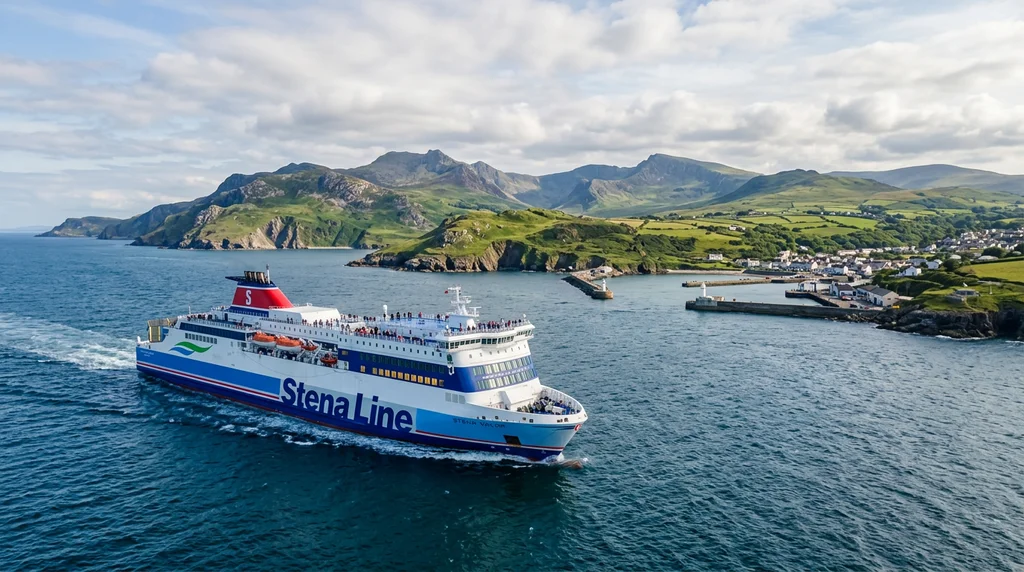
Ferries to Ireland
Check prices & times »Ferries link Great Britain to Ireland across the Irish Sea, from Wales, Scotland and England to ports on both sides of the border — Dublin and Rosslare in the Republic, and Belfast in Northern Ireland. It's a busy, well-served network, and for anyone taking a car it's often easier and cheaper than flying.
One key thing to know: there's no direct passenger ferry from mainland England to the Republic of Ireland. Crossings to Dublin and Rosslare go from Wales, while England connects to Northern Ireland via Liverpool to Belfast. This guide covers all the routes and how to choose.
Ferry routes to Ireland
| Route | Operators | Duration | Booking |
|---|---|---|---|
| Holyhead–Dublin (Wales) | Stena Line, Irish Ferries | ~3h 15m | Check Prices » |
| Fishguard–Rosslare (Wales) | Stena Line | ~3h 30m | Check Prices » |
| Pembroke–Rosslare (Wales) | Irish Ferries | ~4 hours | Check Prices » |
| Cairnryan–Belfast (Scotland) | Stena Line | ~2h 15m | Check Prices » |
| Cairnryan–Larne (Scotland) | P&O Ferries | ~2 hours | Check Prices » |
| Liverpool–Belfast (England) | Stena Line | ~8 hours | Check Prices » |
Routes to the Republic of Ireland sail from Wales; Scotland and England connect to Northern Ireland. See our full Ireland routes guide for the complete picture.
Table of Contents
Who runs ferries to Ireland?
Three operators run the main crossings:
- Stena Line: the biggest, running Holyhead–Dublin, Fishguard–Rosslare, Cairnryan–Belfast and Liverpool–Belfast. View Stena Line profile »
- Irish Ferries: competes on Holyhead–Dublin and runs Pembroke–Rosslare, with fast-ferry options in summer.
- P&O Ferries: runs the Cairnryan–Larne crossing exclusively. View P&O Ferries profile »
Which route should you take?
The best route depends mostly on where you're starting and where you're headed:
- For Dublin and the east: Holyhead–Dublin — the fastest and most frequent route, from North Wales.
- For Cork, Kerry and the south: Fishguard–Rosslare or Pembroke–Rosslare, from South Wales.
- For Belfast and the north from Scotland: Cairnryan–Belfast or Cairnryan–Larne — the shortest crossings.
- For Northern Ireland from northern England: Liverpool–Belfast, often overnight with a cabin.
Sailing to Northern Ireland
The crossings to Belfast and Larne are the quickest way from Great Britain to the island of Ireland. From Scotland, Cairnryan to Belfast (Stena) and Cairnryan to Larne (P&O) both take around two hours, with frequent daily sailings.
From northern England, the Liverpool to Belfast route is a longer overnight crossing of around eight hours, but a cabin lets you sleep through it and arrive fresh. We cover Northern Ireland ferries in more detail on our dedicated page.
Ferries from Ireland to France
Ireland also has direct ferry links to mainland Europe, useful if you want to avoid driving through Britain. Brittany Ferries and others run crossings from Rosslare and Cork to France — Rosslare–Cherbourg, Cork–Roscoff and Rosslare–Dunkirk among them — plus a seasonal link to Spain.
These are long crossings, generally overnight or longer, with cabins.
Booking and travel tips
A few practical things worth knowing:
- Book ahead: vehicle space and cabins sell out on popular routes and sailings, especially in summer.
- Foot passengers: welcome on most routes, often with more flexibility than drivers.
- Pets: carried on all the main operators, with policies varying by route and vessel.
- No baggage charges: unlike flying, ferries let you pack the car freely.
- Documents: bring a valid passport or accepted travel document; check current entry requirements before you travel.