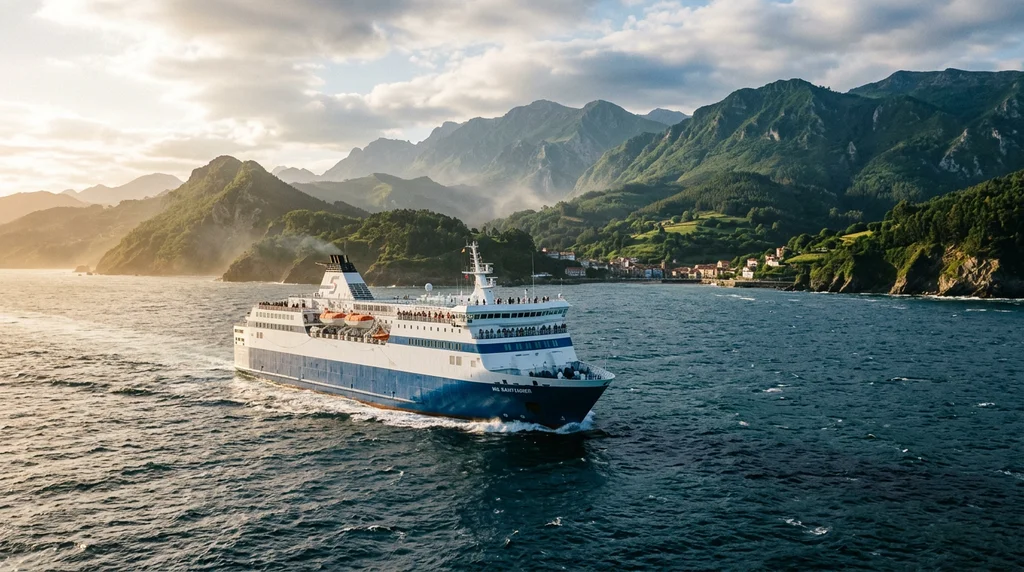
Ferries to Spain
Check prices & times »There are three direct ferry routes from the UK to Spain, all run by Brittany Ferries, and all crossing the Bay of Biscay to the northern Atlantic coast. They sail from Portsmouth and Plymouth to Santander and Bilbao — not to the Mediterranean, so there's no direct ferry to Barcelona or the Spanish islands.
These are long crossings — roughly 20 to 36 hours, with one or two nights on board — so the ferry is a mini-cruise in itself. It's especially popular for road trips, arriving in northern Spain with your own car, camper or motorhome. This guide covers all three routes.
Ferry routes to Spain
| Route | Operator | Time | Notes |
|---|---|---|---|
| Plymouth–Santander | Brittany Ferries | ~20–22h | seasonal (Apr–Nov) |
| Portsmouth–Santander | Brittany Ferries | ~24h+ | year-round |
| Portsmouth–Bilbao | Brittany Ferries | ~24–36h | year-round |
All three routes cross the Bay of Biscay to northern Spain. Plymouth–Santander is the shortest but seasonal; the Portsmouth routes run year-round.
Which route should you take?
The best route depends on your UK start and your Spanish destination:
- Plymouth–Santander: the shortest crossing and ideal from the West Country, but seasonal (roughly April to November), on the Pont Aven. View route »
- Portsmouth–Santander: a reliable year-round all-rounder for northern and central Spain, with a city-centre arrival. View route »
- Portsmouth–Bilbao: best for the Basque Country, Rioja, the Pyrenees and eastern Spain. View route »
Santander or Bilbao?
The two Spanish ports point you towards different regions:
- Santander: the terminal is right in the city centre, a short walk from the station — easy for onward trains to Madrid, and the gateway to Cantabria, Asturias and the Picos de Europa.
- Bilbao: the terminal is at Zierbena, about 16km from the centre, with a shuttle into the city — best for the Basque Country, San Sebastián, Rioja and Barcelona by train.
- Open-jaw trips: you can sail out to one and back from the other to avoid backtracking on a road trip.
The crossings and ships
These are proper long-haul ships, more cruise ferry than Channel hop. The Portsmouth routes use modern LNG-powered ships like the Salamanca and Santoña, while the seasonal Plymouth–Santander route uses the Pont Aven, long regarded as one of the finest ferries serving the British Isles.
Onboard you'll find en-suite cabins, restaurants, bars, shops, a cinema, children's play areas and sun decks. Crossing the Bay of Biscay you may spot dolphins and whales — Brittany Ferries even runs specialist wildlife-watching cruises.
Travel documents and EES
Spain is in the EU and the Schengen area, so you'll need a valid passport. The EU's Entry/Exit System (EES) applies — on your first crossing since it went live, border officers register your fingerprints and a photo, with later trips quicker.
Allow a little extra time on arrival during the rollout, and check your passport's dates before you travel.
Booking and travel tips
A few practical things worth knowing:
- Cabins matter: on a crossing this long, your cabin and vehicle space matter more than a small fare difference — book early.
- Road trips: enter your vehicle dimensions carefully, including roof boxes, bike racks and trailers.
- Pets: carried, with pet-friendly cabins and kennels that sell out fast in summer.
- Returns: booking a return is usually cheaper per leg than two singles.
- Seasons: Plymouth–Santander is seasonal; the Portsmouth routes run year-round.
Explore Spain ferries
Frequently Asked Questions
How many ferry routes are there from the UK to Spain?
Three direct routes, all with Brittany Ferries — Plymouth to Santander, Portsmouth to Santander and Portsmouth to Bilbao.
Is there a ferry from the UK to Barcelona or the Mediterranean?
No — the direct UK–Spain ferries arrive on the northern Atlantic coast, at Santander or Bilbao, not the Mediterranean.
What's the shortest ferry to Spain?
Plymouth to Santander, at around 20 to 22 hours, though it's seasonal — roughly April to November.
How long is the ferry to Spain?
Between about 20 and 36 hours depending on the route, with one or two nights on board.
Do I need a passport for the ferry to Spain?
Yes — Spain is in the EU and Schengen area, so you need a valid passport, and the EES entry system applies on arrival.