Ferries to Holland
Check prices & times »There are three direct ferry routes from the UK to Holland, all sailing from the east coast of England across the North Sea to the Netherlands. Each is run by a different operator, and each suits a different kind of traveller.
Because the crossings are long, most are overnight sailings with cabins — more like a mini-cruise than a quick hop. They're especially convenient for travellers in northern England and Scotland, and for anyone taking a car into the Netherlands, Germany or beyond. This guide covers all three routes.
Ferry routes to Holland
| Route | Operator | Duration | Frequency |
|---|---|---|---|
| Harwich–Hook of Holland | Stena Line | ~6h 30m–7h | up to 4 daily |
| Hull–Rotterdam | P&O Ferries | ~11–12h overnight | daily |
| Newcastle–Amsterdam (IJmuiden) | DFDS | ~15–16h overnight | daily |
All three routes sail from the east coast of England. Harwich is the fastest and most frequent; Hull and Newcastle are overnight crossings.
Which route should you take?
The best route depends on where you're starting and heading:
- Harwich–Hook of Holland: the fastest and most flexible, with up to four sailings a day and excellent Rail & Sail links — the strongest choice from London and the south-east
- Hull–Rotterdam: an overnight crossing handy if you're driving on to Belgium, western Germany or the southern Netherlands
- Newcastle–Amsterdam: the direct overnight boat to Amsterdam (IJmuiden) with en-suite cabins and coach transfers to Amsterdam Centraal
Ferry to Amsterdam or Rotterdam?
If you're heading for a specific city:
- For Amsterdam: the DFDS Newcastle route arrives at IJmuiden, a short transfer from the city
- For Rotterdam: the P&O Hull route arrives at Europoort, with a bus transfer into the city
- For either, or The Hague and Utrecht: the Stena Harwich route reaches Hook of Holland, with fast metro and rail connections
- By train: Harwich–Hook of Holland links seamlessly with Rail & Sail from London
The crossings and ships
These are proper North Sea ships. Stena's Harwich route uses the Superferries Stena Britannica and Stena Hollandica, with en-suite cabins, restaurants and lounges. P&O's Hull route runs the Pride of Hull and Pride of Rotterdam, among the largest ferries in the fleet, with cabins compulsory on the overnight crossing.
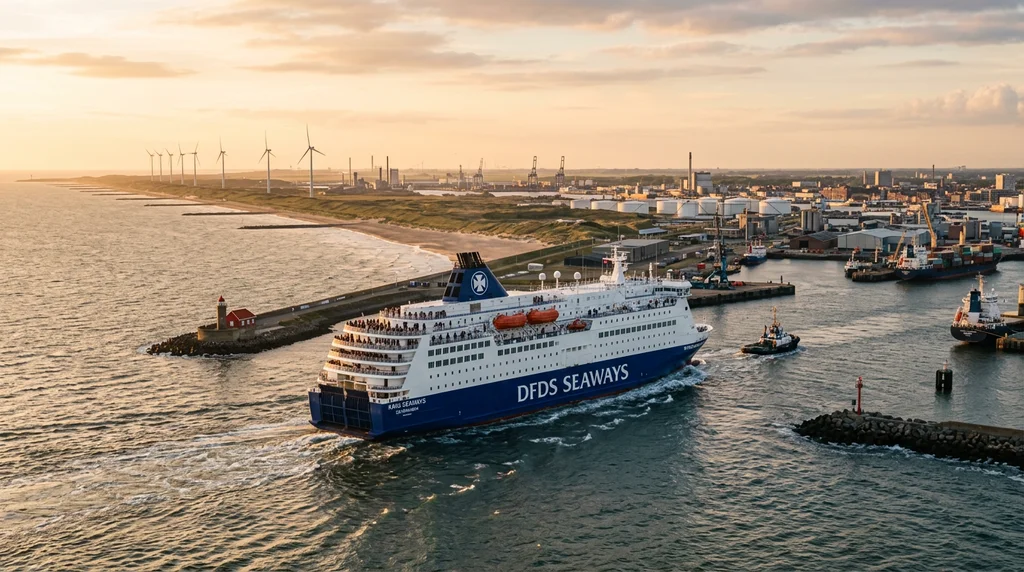
DFDS's Newcastle route uses the King Seaways and Princess Seaways, cruise-style ships with cabins, restaurants, bars, a cinema and entertainment — a genuine mini-cruise.
Travel documents and EES
The Netherlands is in the EU and the Schengen area, so EU entry rules apply. You'll need a valid passport, and the EU's Entry/Exit System (EES) applies on arrival — border officers register your fingerprints and a photo on your first crossing, with later trips quicker.
Allow a little extra time at the border during the EES rollout, and check your passport's dates before travelling.
Booking and travel tips
A few practical things worth knowing:
- No day trips: all three crossings are too long for a same-day return — plan to stay over
- Cabins: compulsory on the overnight Hull and Newcastle sailings, and available on Harwich
- Book ahead: cabins and pet spaces sell out in summer, especially the limited pet cabins
- Pets: carried on all three routes, with pet-friendly cabins or kennels — note pets can't stay in the car on Hull–Rotterdam
- No baggage charges: travelling with a car means you can pack freely
Explore Holland ferries
- Holland ferry companies
- Holland ferry ports
- All UK–Holland ferry routes
- Ferry to Amsterdam
- Ferry to Rotterdam
FAQ
How many ferry routes are there from the UK to Holland?
Three direct routes — Harwich to Hook of Holland (Stena Line), Hull to Rotterdam (P&O Ferries) and Newcastle to Amsterdam (DFDS).
What's the fastest ferry to Holland?
Harwich to Hook of Holland, at around six and a half to seven hours, with up to four sailings a day.
Which ferry goes to Amsterdam?
The DFDS route from Newcastle, arriving at IJmuiden, a short transfer from Amsterdam.
Which ferry goes to Rotterdam?
The P&O route from Hull, arriving at Europoort near Rotterdam.
Do I need a passport for the ferry to Holland?
Yes — the Netherlands is in the EU and Schengen area, so you need a valid passport, and the EES entry system applies on arrival.