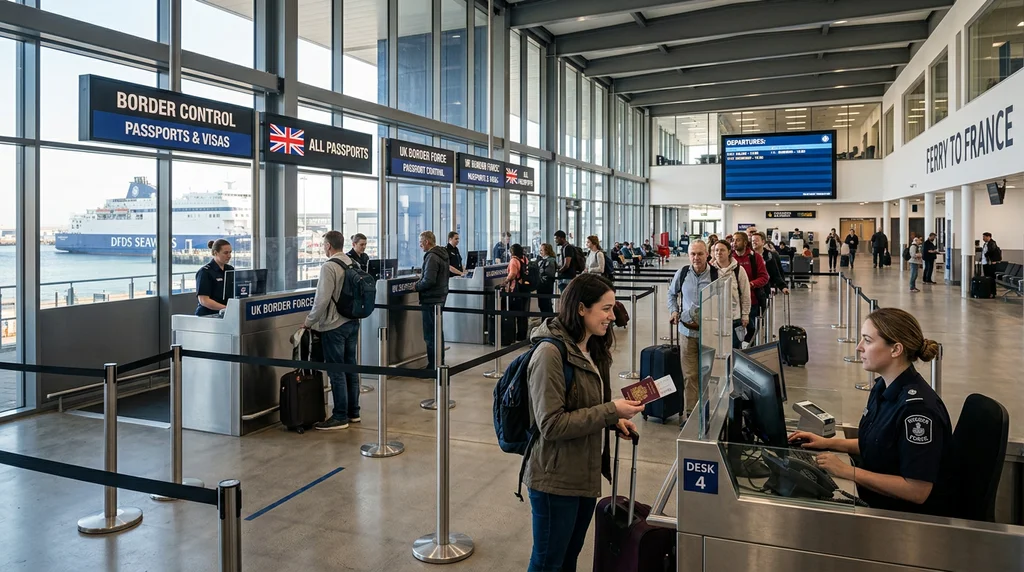
The EU's Entry/Exit System, known as EES, is a digital border system that changes how non-EU travellers — including UK passport holders — are processed when entering the Schengen area. Instead of a passport stamp, your entry and exit are recorded digitally, along with your fingerprints and a facial photo.
For ferry travellers heading to France, Spain, the Netherlands and beyond, that means a new step at the border. This guide explains what EES is, how it works at ferry ports, and how to prepare — but because the rollout has been phased and disrupted, always check with your ferry operator for the latest before you travel.
by Len
What is EES?
EES is an EU system that replaces manual passport stamping with a digital record of every entry to and exit from the Schengen area by non-EU nationals staying short-term (up to 90 days in any 180).
The first time you cross an external Schengen border under EES, you register your biometric details — fingerprints and a facial image — along with your passport data. That record is then valid for around three years, so later trips just need a quick fingerprint or photo check rather than full registration.
Who does EES apply to?
EES applies to short-stay visitors from outside the EU. In practice:
- •
UK passport holders: yes — you'll need to register
- •
EU, Icelandic, Liechtenstein, Norwegian and Swiss nationals: no
- •
Where it applies: 29 Schengen-area countries, mainly in the EU
- •
Not included: Ireland and Cyprus are outside EES, so ferries to Ireland are unaffected
- •
Cost: nothing — EES registration is free, and any request for payment is a scam
The key thing for ferries: before you sail, or after?
This is the detail that matters most at a ferry port, and it depends on the port:
At juxtaposed ports like Dover, French border control is on the UK side, so EES checks happen before you board — you're processed in Dover, then sail already cleared.
At most other ports, such as Portsmouth, Plymouth and Newhaven, the border checks happen on arrival in France or Spain, after you've sailed. So the extra EES step there adds time at the far end, not before departure.
How the registration works
You don't need to do anything before you travel — registration happens at the border. Typically:
- •
Scan your passport at a self-service kiosk or with a border officer
- •
Have your fingerprints taken
- •
Have your facial photo captured
- •
Answer a few basic questions about your trip (such as whether you have a return or onward ticket)
- •
On later trips within the three-year window, just a quick fingerprint or photo check
Expect delays during the rollout
EES became fully operational in April 2026, after a phased introduction that began in October 2025 — but the rollout has not been smooth.
Some ports have faced technical problems with the biometric equipment, and at busy times border authorities have temporarily reverted to manual processing or eased checks to clear queues. The practical upshot for now: allow extra time at the border, travel outside the busiest periods where you can, and follow your operator's advice on when to arrive.
EES vs ETIAS: what's the difference?
It's easy to confuse the two. EES is the biometric entry/exit system described here, and it's free. ETIAS is a separate, upcoming scheme — an advance travel authorisation you'll apply and pay for online before you travel, similar to the US ESTA.
ETIAS is not yet in effect, and will launch later. When it does, you'll need both: an ETIAS authorisation to travel, and EES registration at the border.
How to prepare
A few simple things make EES smoother:
- •
Allow extra time: build in a buffer at the border, especially in peak season
- •
Carry a valid passport: your biometric passport is what's scanned
- •
Have your trip details ready: return or onward ticket, and where you're staying
- •
Check your operator: ferry companies post the latest EES guidance for each route
- •
Don't pay anyone: EES registration is free — ignore sites or messages asking for payment
Frequently Asked Questions
What is the EU Entry/Exit System (EES)?
A digital border system that records non-EU travellers' entry and exit from the Schengen area using fingerprints and a facial photo, replacing passport stamps.
Do I need to register for EES before I travel?
No — there's nothing to do in advance. Registration happens at the border the first time you enter the Schengen area, and it's free.
Does EES happen before or after the ferry?
It depends on the port. At juxtaposed ports like Dover, checks are before you sail; at Portsmouth, Plymouth and most others, they happen on arrival in France or Spain.
Does EES apply to ferries to Ireland?
No — Ireland is outside the EES scheme, so crossings between Britain and Ireland are unaffected.
Is EES the same as ETIAS?
No. EES is the free biometric border check. ETIAS is a separate, paid travel authorisation you'll apply for online, which is not yet in effect.
How long does EES registration last?
Around three years. After your first registration, later trips within that period just need a quick fingerprint or photo check.