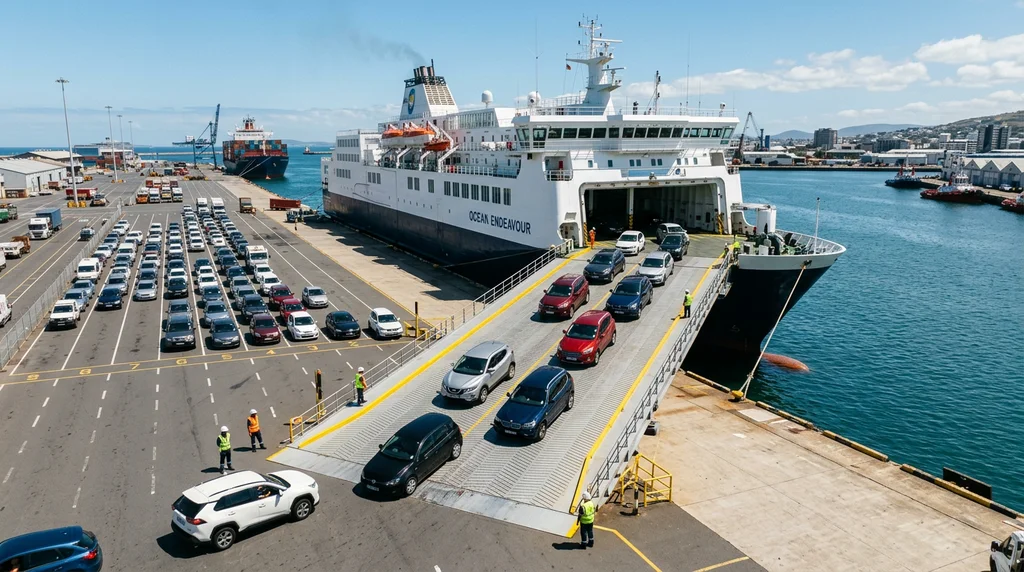
Taking Your Car on a Ferry
One of the great advantages of ferry travel is taking your own car. You arrive with your luggage, your kit and the freedom to drive off at the other end — no hire cars, no baggage limits, and a road trip ready to begin.
Taking a car on a ferry is straightforward once you know how it works. This guide walks through booking, checking in, loading and what to expect on board, whatever the crossing.
Table of Contents
Booking your car onto a ferry
When you book, you'll add your vehicle to the crossing. A few things matter:
- ● Vehicle size: you'll enter your car's length and height — be accurate, as larger vehicles cost more and are checked
- ● Extras: declare roof boxes, bike racks, trailers and towbars, which add to your dimensions
- ● Passengers: add everyone travelling in the car, as fares are often per vehicle plus passengers
- ● Book early: car spaces are limited and sell out in summer and around holidays
How much does it cost to take a car?
The cost of taking a car varies by route, operator, season and how far ahead you book. Short crossings like the Isle of Wight or Dover–Calais are cheaper than long overnight routes to Spain.
On the longer crossings, the fare usually includes your car plus passengers, with cabins added separately. Booking early and travelling off-peak almost always saves money.
Checking in at the port
Arriving at the ferry port with a car is a bit like an airport, but simpler:
- ● Arrive in good time: typically 30–45 minutes before a short crossing, longer for international routes
- ● Have your booking ready: a reference or barcode, plus ID or passports where needed
- ● Follow the lanes: you'll be directed to a marshalling area and given a boarding card or lane number
- ● Wait to load: vehicles board in sequence, so stay with your car and follow the crew's directions
Loading and parking on board
When it's time to board, you'll drive up a ramp onto the car deck:
- ● Follow the crew: they'll direct you to a precise spot, often tightly packed to fit every vehicle
- ● Leave room to exit: on many ferries you'll need to leave space to open doors and reach the stairs
- ● Handbrake and gear: apply the handbrake, leave it in gear or park, and switch off the alarm
- ● Take what you need: you usually can't return to your car during the crossing, so take essentials up with you
During the crossing
On almost all ferries, you can't stay in your car during the crossing — for safety reasons, everyone travels up in the passenger lounges or on deck. The car deck is closed once the ferry sets sail.
That means taking anything you'll want — tickets, medication, snacks, warm layers — up with you when you leave the car. On overnight routes, you'll head to your cabin or seat.
Arriving and driving off
Near arrival, an announcement calls drivers back to the car deck:
- ● Return when called: don't go down until the crew announce it, then make your way to your vehicle
- ● Drive off in turn: follow the crew and the car in front — the deck empties quickly and in order
- ● Have documents handy: on international routes you may pass through border and customs checks on arrival
- ● Then you're away: drive off and straight onto your onward journey
Tips for a smooth crossing with your car
A few final things worth knowing:
- ● Fuel up beforehand: fill the tank before you travel, as port-side fuel can be limited
- ● Note your deck and lane: large ferries are big, so remember where you parked
- ● Electric cars: some ports have chargers, but don't rely on charging on board
- ● Low cars and ramps: if your car is very low, mention it, as some ramps are steep
- ● Pets: if you're travelling with a pet, check the rules, as they usually can't stay in the car
Related guides
For more on specific situations, see our guides on LeShuttle Eurotunnel car train deals, travelling with a motorhome or campervan, taking a ferry without a car, and choosing between a cabin and a seat on longer crossings.
Frequently Asked Questions
Can I stay in my car on a ferry?
No — for safety reasons the car deck is closed during the crossing, and everyone travels in the passenger lounges or on deck.
How early should I arrive to take a car on a ferry?
Usually 30–45 minutes before a short crossing, and longer for international routes — check your operator's advice.
Do I need to declare a roof box or bike rack?
Yes — they add to your vehicle's dimensions, so declare them when booking to avoid problems at check-in.
How much does it cost to take a car on a ferry?
It varies by route, operator, season and how early you book. Short crossings are cheaper than long overnight routes.
Can I take my pet in the car on a ferry?
Usually not during the crossing — most operators require pets to travel in a kennel, pet-friendly cabin or designated area. Check the rules first.