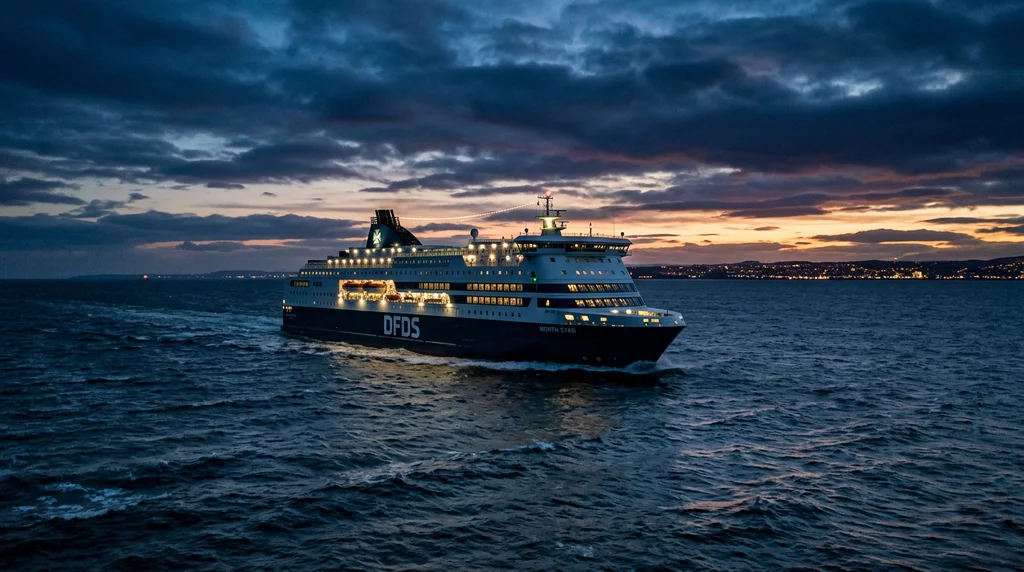
There's no direct ferry from the UK to Denmark. The last one — the Harwich to Esbjerg crossing — closed in 2014, ending the UK's final ferry link to Scandinavia. So today, reaching Denmark means sailing to the Netherlands and driving north through Germany.
It's a longer journey than a direct crossing would be, but it's a scenic drive and lets you take your own car all the way. This guide covers the best crossings and the onward route.
Best routes to Denmark
Newcastle–Amsterdam (IJmuiden)
- Typeto Netherlands, then drive
- Duration~15–16h overnight
Hull–Rotterdam
- Typeto Netherlands, then drive
- Duration~11–12h overnight
Harwich–Hook of Holland
- Typeto Netherlands, then drive
- Duration~6h 30m–7h
| Route | Type | Duration |
|---|---|---|
| Newcastle–Amsterdam (IJmuiden) | to Netherlands, then drive | ~15–16h overnight |
| Hull–Rotterdam | to Netherlands, then drive | ~11–12h overnight |
| Harwich–Hook of Holland | to Netherlands, then drive | ~6h 30m–7h |
There's no direct UK–Denmark ferry. These crossings land in the Netherlands, from where you drive north through Germany to Denmark.
Why there's no direct ferry
For nearly 140 years, the Harwich to Esbjerg crossing linked England with the west coast of Denmark. When DFDS closed it in September 2014, it ended not just the last UK–Denmark ferry but the last direct passenger ferry between the UK and Scandinavia.
Earlier Scandinavian routes — from Newcastle to Norway, and others — had already gone. So today, Denmark is reached overland from a Dutch or French port.
Via the Netherlands
Sailing to the Netherlands is the most practical route to Denmark:
- •
Newcastle–Amsterdam: an overnight crossing to IJmuiden, well placed for the drive north
- •
Hull–Rotterdam: an overnight crossing, handy for northern England
- •
Harwich–Hook of Holland: the fastest Dutch crossing, with strong rail links
- •
The drive on: roughly six and a half hours from the Dutch coast up through Germany to Denmark
The onward drive
From the Netherlands, the route to Denmark runs north through Germany:
- •
Through Germany: a scenic autobahn drive up through northern Germany
- •
Into Denmark: cross the border into Jutland, or head for the islands and Copenhagen
- •
Copenhagen: the Puttgarden–Rødby ferry (Germany–Denmark) is a common final leg to Zealand
- •
Plan your stops: it's a long drive, so build in a break or an overnight
Which crossing should you take?
The best crossing depends on where you start:
- •
The north-east and Scotland: Newcastle–Amsterdam, avoiding a long drive south first
- •
Northern England: Hull–Rotterdam
- •
The east and south-east: Harwich–Hook of Holland
- •
Without a car: Harwich–Hook of Holland, then onward trains — though it's a long journey
Foot passengers
Reaching Denmark without a car is possible but involves several legs — a ferry with good rail links, then trains onward through the Netherlands and Germany. Harwich–Hook of Holland is the best starting point for its rail connections.
It takes real planning, so map out every connection before you book, and allow plenty of time for the onward journey.
Travel documents and EES
Denmark is in the EU and the Schengen area, so you'll need a valid passport. Because you travel via the Netherlands, the EU's Entry/Exit System (EES) applies when you first enter the Schengen area at your Dutch arrival port.
Allow a little extra time at the border during the EES rollout, and check your passport's dates before you travel.
Explore Denmark ferries
Frequently Asked Questions
Is there a direct ferry from the UK to Denmark?
No — the last direct ferry, Harwich to Esbjerg, closed in 2014. Today you sail to the Netherlands and drive north through Germany to Denmark.
What's the best way to reach Denmark by ferry?
Sail to the Netherlands — Newcastle–Amsterdam, Hull–Rotterdam or Harwich–Hook of Holland — then drive north through Germany, around six and a half hours on.
How long is the drive from the Netherlands to Denmark?
Roughly six and a half hours from the Dutch coast up through northern Germany, depending on your destination in Denmark.
How do I get to Copenhagen by ferry?
Sail to the Netherlands and drive through Germany; the Puttgarden–Rødby ferry is a common final leg across to Zealand and Copenhagen.
Do I need a passport for Denmark?
Yes — Denmark is in the EU and Schengen area, so you need a valid passport, and the EES entry system applies at your Dutch arrival port.