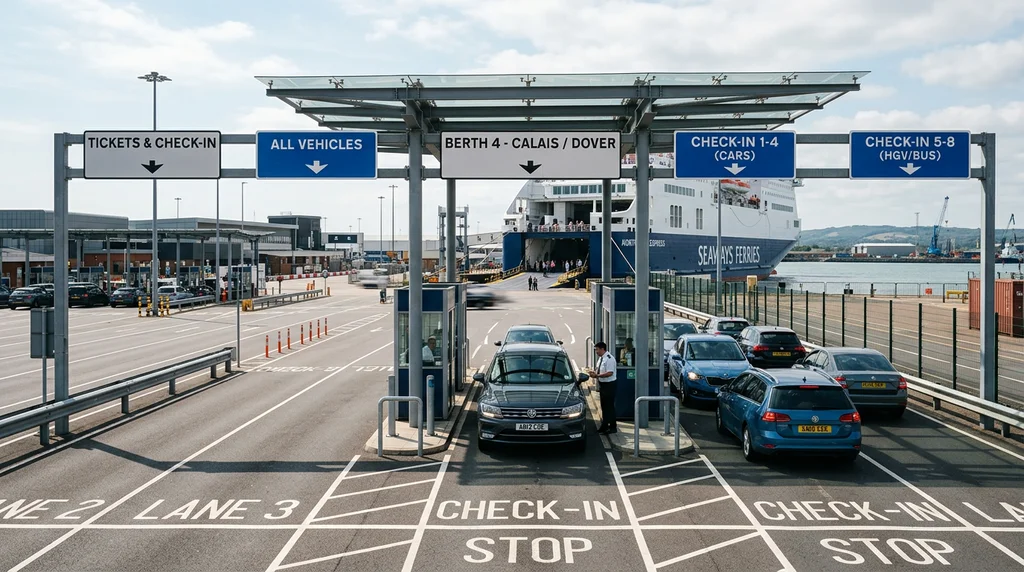
Turn up too late for a ferry and you can miss it — check-in usually closes well before departure, and once it does, that's it. Turn up far too early and you're waiting around. Getting the timing right makes for a calm, smooth start.
How early to arrive depends on whether you're taking a car, and whether it's a short domestic hop or an international crossing with border checks. This guide gives clear guidance for each.
by Len
The general rule
As a rough guide, plan to arrive:
- •
Short domestic crossings with a car: about 30–45 minutes before departure
- •
Short crossings on foot: about 15–30 minutes before departure
- •
International crossings with a car: often 60–90 minutes before, to allow for checks
- •
Always check your operator: exact check-in times vary by route and are on your booking
Why check-in closes early
Check-in closes before departure because the crew need time to load every vehicle in sequence, complete safety checks and, on international routes, carry out border and security procedures.
Miss the check-in cut-off and you'll usually be turned away, even if the ferry hasn't sailed — so the closing time matters more than the departure time.
Taking a car
With a vehicle you need a bit more time:
- •
Marshalling: you'll be directed to lanes and wait to be loaded in order
- •
Busy sailings: allow extra time in summer and around holidays, when queues build
- •
Larger vehicles: motorhomes, campers and trailers may need to arrive earlier — check the operator
- •
Don't cut it fine: loading starts well before departure, so aim for the earlier end of the window
Foot passengers
Foot passengers can usually arrive a little later than drivers, often around 15 to 30 minutes before departure, as there's no vehicle to load.
That said, some busy or restricted sailings require foot passengers to check in — and even to have booked — in advance, so check your route's rules before turning up.
International crossings and border checks
Crossings to Europe take longer to process, so arrive earlier:
- •
Passport and border checks: allow time for passport control and, where it applies, the EES entry system
- •
Customs: vehicles may be subject to customs checks on some routes
- •
Peak-season queues: juxtaposed ports like Dover can see long waits at busy times
- •
Follow operator advice: international routes often ask for 60–90 minutes, sometimes more in peak season
Tips for a smooth arrival
A few things to make port arrival easy:
- •
Have your booking ready: reference or barcode to hand, plus ID or passports where needed
- •
Fuel and food first: sort these before you arrive, as port facilities can be limited
- •
Allow for traffic: build in a buffer for delays getting to the port
- •
Better early than sorry: arriving a little early and waiting beats missing the sailing entirely
Related guides
For more, see our guides on taking your car on a ferry, taking a ferry without a car, and the EU border rules for travel to Europe.
Frequently Asked Questions
How early should I arrive for a ferry?
Roughly 30–45 minutes before a short crossing with a car, 15–30 minutes on foot, and 60–90 minutes for international crossings. Always check your operator.
What happens if I arrive after check-in closes?
You'll usually be turned away, even if the ferry hasn't sailed — check-in closes before departure to allow loading and checks.
Do foot passengers need to arrive as early as drivers?
Usually not — foot passengers can often arrive a little later, though some busy sailings require checking in or booking ahead.
How early should I arrive for a ferry to Europe?
Often 60–90 minutes, sometimes more in peak season, to allow for passport control, the EES entry system and any customs checks.
Why does ferry check-in close so early?
To give the crew time to load vehicles in order, complete safety checks, and handle border and security procedures on international routes.