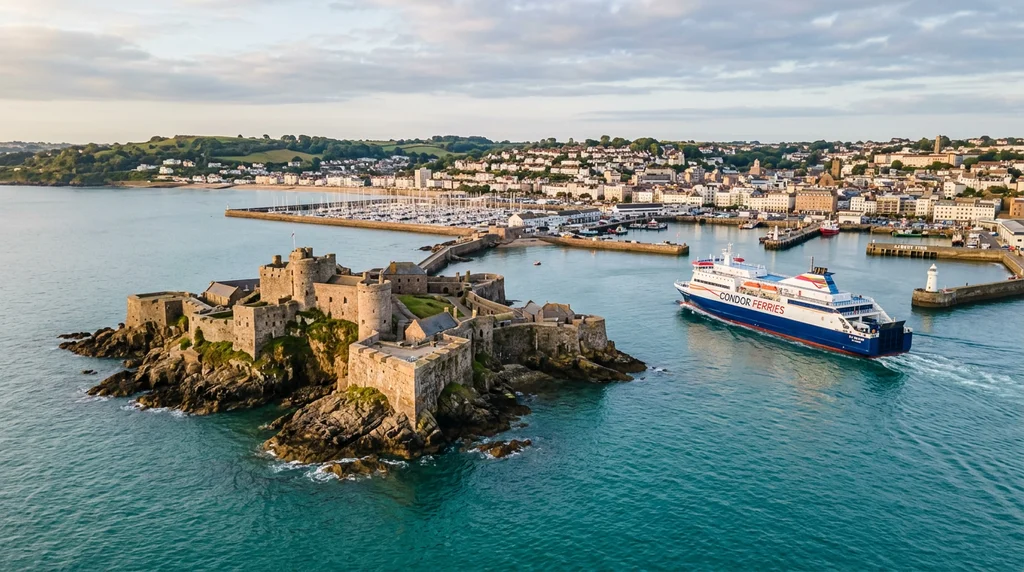
Ferry to Jersey
Check prices & times »Jersey is the largest of the Channel Islands, lying just 14 miles off the French coast near St Malo and about 85 miles from the south of England. Its position gives it some of the warmest weather in the British Isles and a culture that blends English and French influences.
Ferries to Jersey are now run by DFDS, which took over the main routes in 2025. You can sail from St Malo in France — the shortest crossing — or from Poole and Portsmouth on the English south coast. Because the operator changed recently, always check the current timetable for your dates.
Jersey ferry routes
| Route | Operator | Duration | Notes | Booking |
|---|---|---|---|---|
| St Malo–Jersey (France) | DFDS | ~2 hours | shortest crossing | Check Prices » |
| Poole–Jersey (England) | DFDS | ~4 hours | fast ferry | Check Prices » |
| Portsmouth–Jersey (England) | DFDS | ~10 hours | conventional, via Guernsey | Check Prices » |
St Malo is the shortest crossing at around two hours. From the UK, Poole is usually the quicker option, while Portsmouth is longer but may be easier to reach.
Sailing from France: St Malo
St Malo, the walled Breton port, is just 14 miles from Jersey, making it the shortest crossing at around two hours.
It's the logical choice if you're already in France, or driving down from the Netherlands, Belgium or western Germany. St Malo also makes a good overnight stop before or after the crossing, and pairs well with a wider Brittany or Normandy trip.
Sailing from the UK: Poole and Portsmouth
Two English ports serve Jersey:
- Poole: usually the quicker sea crossing, around four hours on the fast ferry — best if crossing time is your priority
- Portsmouth: a longer crossing of around ten hours, often via Guernsey, but can be easier to reach and offers overnight sailings with cabins
- Choosing: if you're deciding only on time at sea, Poole usually wins; on road access and departure times, Portsmouth may suit better
The island: what to expect
Jersey's capital, St Helier, is a lively base with cobbled streets, shops and restaurants, and the island is known for excellent food — local Jersey milk and fresh seafood among the highlights.
Beyond the town there are miles of beaches and bays, castles and German wartime fortifications to explore. Taking a car makes sense, letting you reach the quieter corners of the island — though remember driving is on the left and lanes can be narrow.
Travel documents
Jersey is part of the Common Travel Area but not the UK or the EU. British citizens don't need a passport to travel from the UK, but a valid photo ID is required, and rules can vary by operator.
If you're sailing via St Malo, you're entering France, so bring a passport — and EU entry rules, including the EES system, apply on the French side.
Booking and travel tips
A few practical things to know:
- Book ahead: summer and school holidays are busy — Jersey is a popular destination
- Vehicles: cars are carried, with no baggage charges when you drive on
- Pets: carried on the routes, kept in your car or a carrier — no pet passport needed for Jersey itself
- Photo ID: always required, even without a passport from the UK
- Check the operator: after the 2025 change to DFDS, confirm the current timetable for your dates
Frequently Asked Questions
Who runs the ferry to Jersey?
DFDS runs the main Jersey ferry routes, after taking over from the island's former operator in 2025.
What's the shortest ferry to Jersey?
St Malo to Jersey, at around two hours — the quickest crossing, and ideal if you're travelling from France.
How long is the ferry from Poole to Jersey?
Around four hours on the fast ferry — usually the quicker of the two UK routes.
Do I need a passport for Jersey?
Not for British citizens travelling from the UK, but you must carry valid photo ID. Bring a passport if you're sailing via St Malo in France.
Can I take my car to Jersey?
Yes — cars are carried on the main routes, with no baggage charges. Driving in Jersey is on the left.